 |
Seed
should be sown fresh, i.e. straight from the sticky goo in the pod. Wash this
off (in a sieve) Interesting idea was told
me by a Chilean email contact who gives his fresh pods to his grand children,
their job is to put the goo and seeds in their mouths, swirling and sucking
off all the sweet goo before spitting the now clean seeds onto the pots! I
tried this and the fruits are lovely and it seems I get even better
germination then sow in gritty ericaceous compost, a number of seeds can be sown
to a pot, cover seed to a depth of about 5mm and I find a layer of grit or
"Perlite" over this is good for preventing drying out (this is very important - do not
let seed pots go dry) water just enough to keep moist without becoming wet.
I have had good results recently using sealed bags for the pots as this
avoids having the compost and seed becoming dry during germination (you do
have to make sure the bags come off once you notice the first shoot appear!
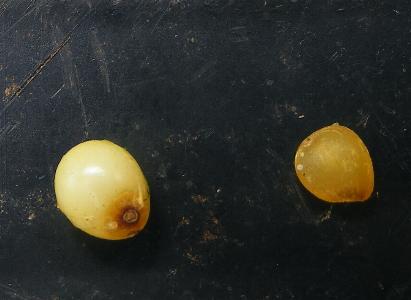
This picture shows what fresh seed (on the left) looks like in comparison to
dry seed (on the right) If you have dry seed soak it until it looks all
plumped up (change water regularly)
Place
seed pots somewhere at ambient temperature like a cold frame or under a cool
greenhouse bench, avoid high temperatures. (I get very good results by first placing
the sown seed in a beer cooler for 4 weeks , then either mild bottom heat or
natural temperatures. (but results on a shaded window
sill are just as good)
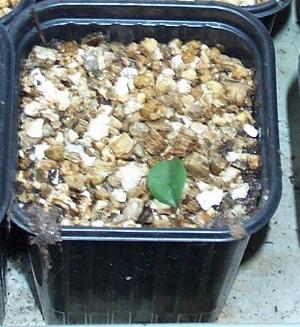
Newly
germinated seedling below. Seedlings sit like this for some time so be
patient!
Watch
for snail & slug attack, preventative action is a good idea.
and also watch
for aphids and treat immediately if seen. Even a few aphids quickly kill
seedlings.
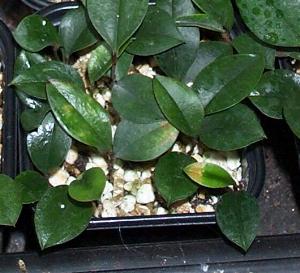
After
about 6 months the pot of seedlings will look like this below, other than
watching for pests and watering, pots can be given the occasional liquid
feed depending on how much food the original seed compost contained (I
use 18 month osmocote so tend not to liquid feed)
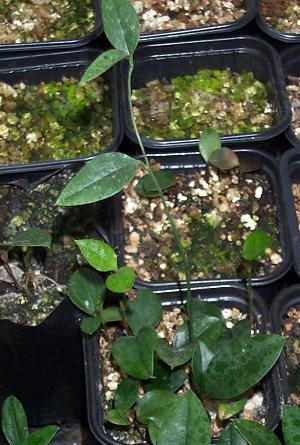
At
some point after about 1 year the seedlings will start to make extension
growth as below, when most of the seedlings have gone away like
this its time to pot them individually. Take great care with the roots
as they are brittle and will be tangled together.
 When
seedlings have more than one stem and are growing strongly as below they can move
to 1.5-2lt containers, in a further 2 years they will reach flowering
size. All in all it takes about 5 years for seeds to become flowering
plants, about 1 year longer than a cutting. Results are unpredictable
colour wise, but I have yet to see a "bad" seedling, all will
be beautiful. When
seedlings have more than one stem and are growing strongly as below they can move
to 1.5-2lt containers, in a further 2 years they will reach flowering
size. All in all it takes about 5 years for seeds to become flowering
plants, about 1 year longer than a cutting. Results are unpredictable
colour wise, but I have yet to see a "bad" seedling, all will
be beautiful.
|